Amazon Ads ROI Analysis
Estimated cost to generate one net-new purchase per book · Excludes intent buyers who would have bought anyway
How this works: Cost per net-new purchase = (CPC ÷ conversion rate) ÷ (1 − intent buyer rate). Intent buyers are people who already knew the book and would have bought it regardless — they click your ad as a navigation shortcut, not because the ad created demand. The ROI multiplier shows how many times your royalty you spend to acquire one genuinely new reader. A multiplier of 1× means the ad pays for itself directly from royalties; 2–3× is marginal but justifiable for rank lift; above 6× means there are better channels.
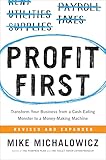
Defensive keyword targeting: bid on your own title + 'profit first book' to prevent competitors from stealing your search real estate.
Full analysis ↓
Profit First dominates its category (BSR ~2,000). High intent-buyer rate (~50%) because the brand is so well-known that many searchers already intend to buy. Conversion rate is strong (14%) due to 14,000+ reviews. The challenge: ads mostly accelerate existing demand rather than creating new buyers. Net-new cost is high relative to the ~$2.10 PRH royalty. Best used for defending shelf position against competitor ads, not for pure new-customer acquisition.
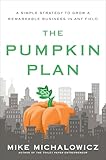
Competitor targeting: show ads on pages for 'Built to Sell', 'The E-Myth', and 'Traction' — readers of those books are your ideal audience.
Full analysis ↓
Pumpkin Plan has a loyal but niche audience (small business strategy). Moderate intent-buyer rate (~35%) — many searchers are discovering it for the first time via 'business growth book' queries. Conversion rate is decent (11%) given 4.4-star rating and 1,200+ reviews. Cost per net-new purchase lands in the marginal zone — ads won't be a profit center but can sustain organic rank and drive incremental sales.
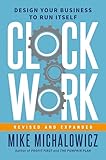
Keyword targeting: 'business systems', 'delegation book', 'work less earn more' — these attract readers who don't yet know Clockwork.
Full analysis ↓
Clockwork benefits from the Revised & Expanded edition launch momentum (BSR ~61,000). Intent-buyer rate is moderate (~38%) — the 'business systems / delegation' category attracts discovery buyers. Conversion rate (12%) is solid. The combined edition strategy means two ASINs compete, so ads on the revised edition can cannibalize organic sales of the original. Net-new cost is marginal but justifiable given the rank-lift halo effect.
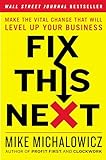
Cross-sell targeting: place ads on Profit First product page and 'Traction' / 'Scaling Up' pages — Profit First readers are the highest-intent FTN audience.
Full analysis ↓
Fix This Next has a strong concept but lower brand recognition than Profit First. Intent-buyer rate is lower (~30%) because the 'business hierarchy of needs' concept is still being discovered. Conversion rate (10%) is held back by the unrecouped advance situation — the book hasn't had a major marketing push since launch. Ads could meaningfully accelerate new discovery, especially targeting readers of Profit First who haven't found FTN yet.
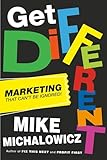
Keyword targeting: 'marketing for entrepreneurs', 'stand out from competition book', 'small business marketing' — high-discovery queries.
Full analysis ↓
Get Different is in a competitive 'marketing for small business' space but has a unique angle. Low intent-buyer rate (~25%) — most searchers for 'marketing book' or 'stand out business' haven't heard of it. Conversion rate is lower (9%) partly because the cover and title don't immediately signal the book's value. Ads could be effective for discovery, but the unrecouped advance of $280K means every incremental sale helps recoupment. Worth testing.
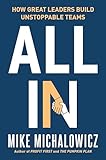
Launch-phase strategy: broad keyword targeting ('leadership book', 'employee engagement', 'all in business') combined with Sponsored Brands to build author brand recognition.
Full analysis ↓
All In is the newest title (Jan 2024) with the fewest reviews (244). Low intent-buyer rate (~20%) because brand awareness is still building. Conversion rate is lower (8%) — fewer reviews means less social proof on the product page. However, this is exactly the scenario where ads are most valuable: building early momentum, accumulating reviews, and establishing organic rank. The cost per net-new purchase is in the marginal zone but the long-term rank benefit justifies it.
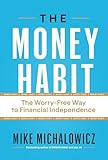
Aggressive launch targeting: 'personal finance book', 'money habits', 'financial freedom' keywords + competitor targeting on Ramsey, Housel, and Sethi titles.
Full analysis ↓
The Money Habit is brand-new (Jan 2026) and has a higher royalty rate via Page Two: Simplified (~15% of list ≈ $3.30/copy). Very low intent-buyer rate (~15%) — almost all ad clicks would be discovery buyers. The personal finance category has moderate CPC ($0.60–$0.95). With only ~8,000 sales so far, ads are the primary growth lever right now. The math is favorable: cost per net-new purchase ($7–$11) vs. royalty ($3.30) is a 2–3× multiplier — marginal but strong for a launch phase.
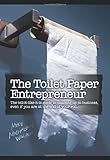
Not recommended at current state. If revived with a new edition, use keyword targeting on 'first business book', 'startup entrepreneur' queries.
Full analysis ↓
TPE is a discontinued self-published title (BSR ~1.3M, 0 weekly sales). Very low conversion rate (6%) due to age and minimal reviews. However, the self-published royalty is high (~$4.50/copy net). The low CPC ($0.35–$0.60) in the low-competition 'entrepreneurship basics' space means cost per net-new purchase could be acceptable. The real question is whether to invest in a title with no active marketing support. Verdict: not recommended unless you plan to revive the title with a new edition.
Not recommended. Ad spend would not recover cost without a significant title refresh.
Full analysis ↓
Surge is discontinued (BSR ~1.9M, 0 weekly sales). Very low conversion rate (5%) and minimal search volume for 'business trend' topics. Despite the high self-pub royalty ($4.20/copy), the low CVR means cost per net-new purchase is still high. Not a productive use of ad budget without a title revival.
Seasonal gift targeting: 'money books for kids', 'financial literacy children', 'piggy bank book' — run Nov–Dec and April–May (Mother's Day / graduation).
Full analysis ↓
My Money Bunnies is a children's picture book — a completely different category with different Amazon Ads dynamics. Children's books have low search volume on Amazon and most discovery happens via gift searches ('money books for kids', 'financial literacy children'). CPC is low ($0.40–$0.70) and intent-buyer rate is very low (~10%). The math is actually decent: cost per net-new purchase ($6–$11) vs. royalty ($3.60) is a 2–3× multiplier. Worth a small test around gift-giving seasons (Nov–Dec, back-to-school).
Not applicable — Audible-only title. Use ACX/Audible promotional programs instead.
Full analysis ↓
Recession Response is an audiobook-only title on Audible/ACX. Amazon Sponsored Products ads do not apply to ACX/Audible-only titles — the product page is not eligible for Sponsored Products. Audible has its own separate promotional programs (Whispersync deals, Audible Escape) that are the appropriate channel.